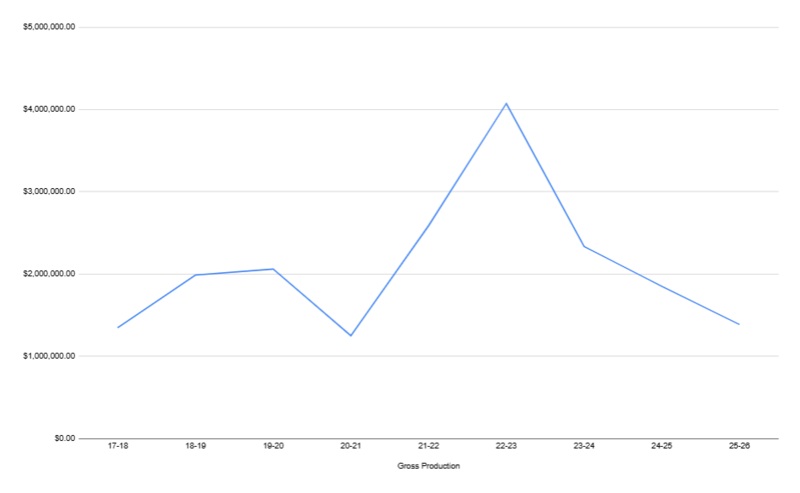

Over the past several years, our district has seen some significant changes in funding, and it’s affecting how we plan for the future while continuing to serve our students at a high level. One of the biggest changes has been a drop in gross production revenue, which has decreased by about $400,000. In the past, this funding helped us provide extra compensation, including teacher stipends that support and reward the great work happening in our classrooms every day.
At the same time, we’ve had to absorb increases in teacher salaries due to state legislation. In the 2023–2024 school year, SB 1119 raised the minimum salary schedule by $3,000–$6,000. Those increases were not fully funded by the state, which cost our district $333,000. More recently, SB 201 added another $2,000 increase to the minimum salary schedule, bringing an additional cost of $180,000. When combined with the loss in gross production revenue, this represents a total impact to our budget of around $900,000.
We want to be very clear, we fully support raising teacher pay. Our teachers are the heart of what we do, and they deserve it. At the same time, when these increases aren’t fully funded by the state, it puts a strain on local school budgets and forces difficult decisions in other areas.
Even with these challenges, our district continues to grow. We finished last school year with 769 students, and we’re currently at 828 students. That growth says a lot about our schools and community, and we’re proud of it. As we grow in student population, we will see an increase in state aid, and revenue from district valuation will grow as well. However, those funding increases lag behind by about a full school year. Because of that delay, we are in a position where we must stabilize our budget now so we can continue to move forward without being negatively impacted by ongoing unfunded mandates. As that growth funding catches up, we will be able to add staff to meet the needs of our students, especially as we prepare to open a new school in the 2027–2028 school year.
To help offset the loss in revenue, we are reducing general fund spending by about $300,000. That helps, but with continued unfunded mandates, we have to look at other options as well. Right now, we’re focusing on ways to limit the impact on people as much as possible. That includes managing staffing through natural attrition and reducing some temporary contracts. However, if needed, we may have to consider a reduction in force. That is absolutely a last resort, and not something we take lightly.
If this is the first time you are hearing about these challenges, we want to provide some context. We shared information with our community back in January, and we began talking with staff at the start of the school year about a tightening budget. As gross production revenue continued not to rebound, and the state chose not to fund the 2023–2024 pay raise after the first year, we had more serious conversations with staff in January.
This past week, the Oklahoma Legislature and the Governor announced the budget agreement for next year, and we learned that additional unfunded pay raises would again be included. Because of that, we scheduled a staff meeting last Wednesday after school to talk openly about the future and the current budget constraints. This has led us to share this updated information with our community so everyone understands the ongoing impacts to school funding.
Our staff make a difference in the lives of students every single day, and we know how important they are to our schools. Every decision we make is done with a lot of thought and care for the people who make this district what it is.
We will continue to be open and honest with our community as we work through these challenges. Our goal is to keep providing the best possible education for our students while being responsible with the district’s finances.